







The Nomad's Stuff Strategy: How to Never Own Too Much or Pay Storage Fees Again
Master nomad logistics with strategic belongings rotation, smart shipping decisions, and storage alternatives. Skip the fees, travel light.
Build a portable tech setup that works worldwide. Equipment checklist, power solutions, and customs strategies to avoid gear failures and confiscations.
Your laptop died in Bangkok. Your charger got confiscated in Dubai. Your power bank exploded in Buenos Aires. Sound familiar? Building a bulletproof nomad tech setup isn't just about buying the best gear, it's about choosing equipment that survives different power systems, customs rules, and equipment availability worldwide.
The difference between working smoothly and scrambling for replacements in a foreign country comes down to smart preparation. Here's how to build a tech kit that actually works anywhere.
Choose redundancy over perfection. The best laptop in the world is useless if it breaks and you can't find parts in rural Vietnam. Your strategy should prioritize equipment that's widely available, easily replaceable, and works across different infrastructure standards.
Laptop selection: Pick mainstream brands with global service networks. Dell, HP, Lenovo, and Apple have service centers in most major cities. Avoid niche gaming laptops or boutique brands that only have support in their home country.
Power requirements: Check your device specs before buying. Look for equipment that accepts 100-240V input (most modern devices do). This eliminates the need for heavy voltage converters and reduces the risk of frying your gear on different power systems.
Weight distribution: Keep your total tech weight under 8 pounds if possible. The pragmatic middle ground that most digital nomads occupy includes a quality laptop, tablet for light work, and essential accessories only, totaling 5-8 lbs.
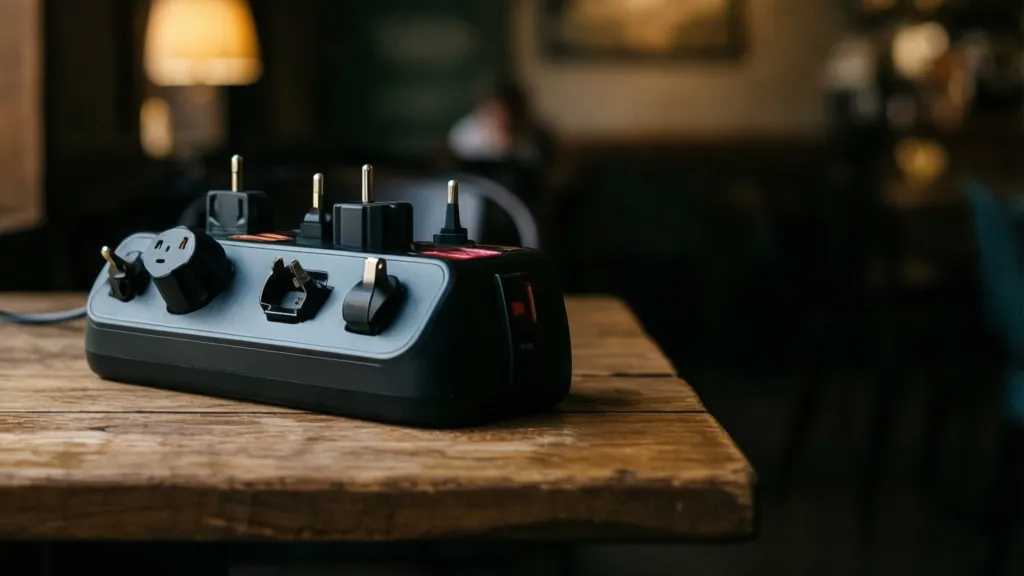
Universal adapters with surge protection. Skip the cheap adapters from airport shops. There are 15 plug types in use across the world, and universal adapters tend to cover all of these types. Invest in a quality universal adapter with built-in surge protection, power fluctuations in developing countries can kill electronics instantly.
GaN chargers for efficiency. Gallium Nitride (GaN) chargers are smaller, lighter, and more efficient than traditional chargers. A single 65W GaN charger can power your laptop, phone, and tablet simultaneously. Look for models with interchangeable plug types rather than adapters that add bulk.
Power bank strategy. Carry two smaller power banks (10,000 mAh each) instead of one large one. Many airlines restrict power banks over 20,000 mAh, and having two units means backup if one fails. Choose banks with both USB-A and USB-C outputs.
Local power considerations. Research your destination's power reliability. Countries with frequent outages (parts of Africa, South Asia) require different strategies than stable grids (Europe, Japan). In unreliable areas, prioritize battery life over performance.
Documentation is everything. Carry purchase receipts for all expensive electronics, especially if they look new. Customs officials often assume expensive gear without receipts is for commercial sale, not personal use.
Know the import limits. Most countries allow one laptop and one phone for personal use without declaration. Additional devices, professional camera equipment, or multiple identical items trigger commercial import assumptions. Check specific country limits before travel, some countries restrict certain electronics entirely.
Customs declaration strategy. A basic search generally entails an officer reviewing or analyzing the contents of the device manually. Keep devices charged and accessible. Have business cards, portfolio examples, or other proof that equipment is for your legitimate work, not resale.
Regional variations matter. Brazil requires locally established importers for commercial goods, and many Latin American, Middle Eastern, and Asian markets have similar expectations. Research specific requirements for your destination countries.
Certification marks. Some countries require specific safety certifications on electronics. A device can hold valid wireless approval and still be blocked for lacking the safety mark. Check if your devices display CE marks (Europe), FCC marks (US), or other required certifications for your destinations.
Critical spares. Pack extra charging cables, especially USB-C and proprietary connectors. Cables fail frequently and aren't always available locally. Carry a small multi-tool with Phillips and flathead screwdrivers for basic repairs.
Cloud-first approach. Store everything important in the cloud with offline sync capabilities. If your laptop gets stolen or dies, you can continue working on a borrowed device or internet café computer while arranging replacement.
Local sourcing research. Before arriving in a new country, research where to buy electronics locally. Know the location of major electronics markets, authorized service centers, and computer repair shops in cities where you'll stay longer than a week.
Insurance considerations. Standard travel insurance often excludes electronics or has very low limits. Consider specialized gear insurance or check if your existing policies (homeowner's, renter's) cover equipment abroad.
Building a nomad tech setup that survives any country requires thinking beyond specs and features. Choose mainstream, serviceable equipment with global compatibility. Plan for power variations, customs scrutiny, and local replacement availability. The goal isn't having the perfect setup, it's having a setup that keeps working no matter where you land.
Your office fits in a bag. Make it a reliable one that doesn't leave you stranded when things go wrong.
Master nomad logistics with strategic belongings rotation, smart shipping decisions, and storage alternatives. Skip the fees, travel light.
Build a bulletproof internet backup system with mobile hotspots, failover protocols, and emergency procedures to keep working when primary WiFi fails.
Master the art of setting up a productive workspace within 24 hours of arrival. Complete guide for nomads to optimize any location for remote work.

Complete system for digital nomads to handle mail forwarding, document storage, and minimize possessions without a permanent address.
Essential backup strategies and workflow adaptations for digital nomads when internet fails. Practical tips for staying productive with unreliable connectivity.

Build a modular portable office that sets up in 15 minutes across hostels, Airbnbs, cafes, and co-living spaces. Budget-friendly gear guide included.
Get the best nomad resources, tips, and exclusive deals delivered straight to your inbox. No spam, just valuable content for your nomad journey.
Join fellow nomads. Unsubscribe anytime.